Louvre awnings made for Johannesburg and Pretoria weather
Rotating aluminium blades give you shade and moving air through a highveld summer, then seal into a solid roof before the afternoon storm arrives. Made to measure, installed by our own Gauteng crew, with free site visits across Johannesburg and Pretoria.
One roof for four seasons of highveld weather
Gauteng asks a lot of a patio roof. Summer brings fierce sun at altitude and thunderstorms that build all afternoon and break hard around four; winter mornings are cold and clear, and you want every ray that reaches the stoep. A louvre awning answers both. The blades rotate to feed low winter sun into the house, tilt to cut summer glare while the air keeps moving underneath, and close into a solid surface that sheds rain into a gutter concealed in the frame.
Each Urbanshades louvre roof is made to measure from marine-grade, powder-coated aluminium with stainless fasteners and no ferrous metal in the structure. We come out to measure at no charge anywhere in Johannesburg, Pretoria or greater Gauteng, put a fixed written quote in your hands within 48 hours, and install with our own Gauteng crew. The written guarantee is registered to your address.
Three decisions that shape your quote
Every roof is made to measure, so the spec is set by your patio rather than by a catalogue. These are the choices that matter.
A removable crank rotates the blades from full shade to fully open. There is nothing to wire and nothing to service, which keeps the cost down on smaller patios that only need adjusting a few times a day.
Manual operation
A remote moves the blades, and an optional rain sensor drives the roof closed at the first drops, which matters when the storm rolls in while you are still on the N1. All electrics sit in sealed IP65 housings.
Motorised with sensors
The frame can fix to the house above your patio doors or stand free over a braai area or pool deck on slim aluminium posts. Wider spaces run as linked bays with a continuous blade line and no visible break.
Attached or freestanding
Louvre awnings on the highveld
Two recent installs by our Gauteng crew. The photo pool grows with every hand-over.
See all projects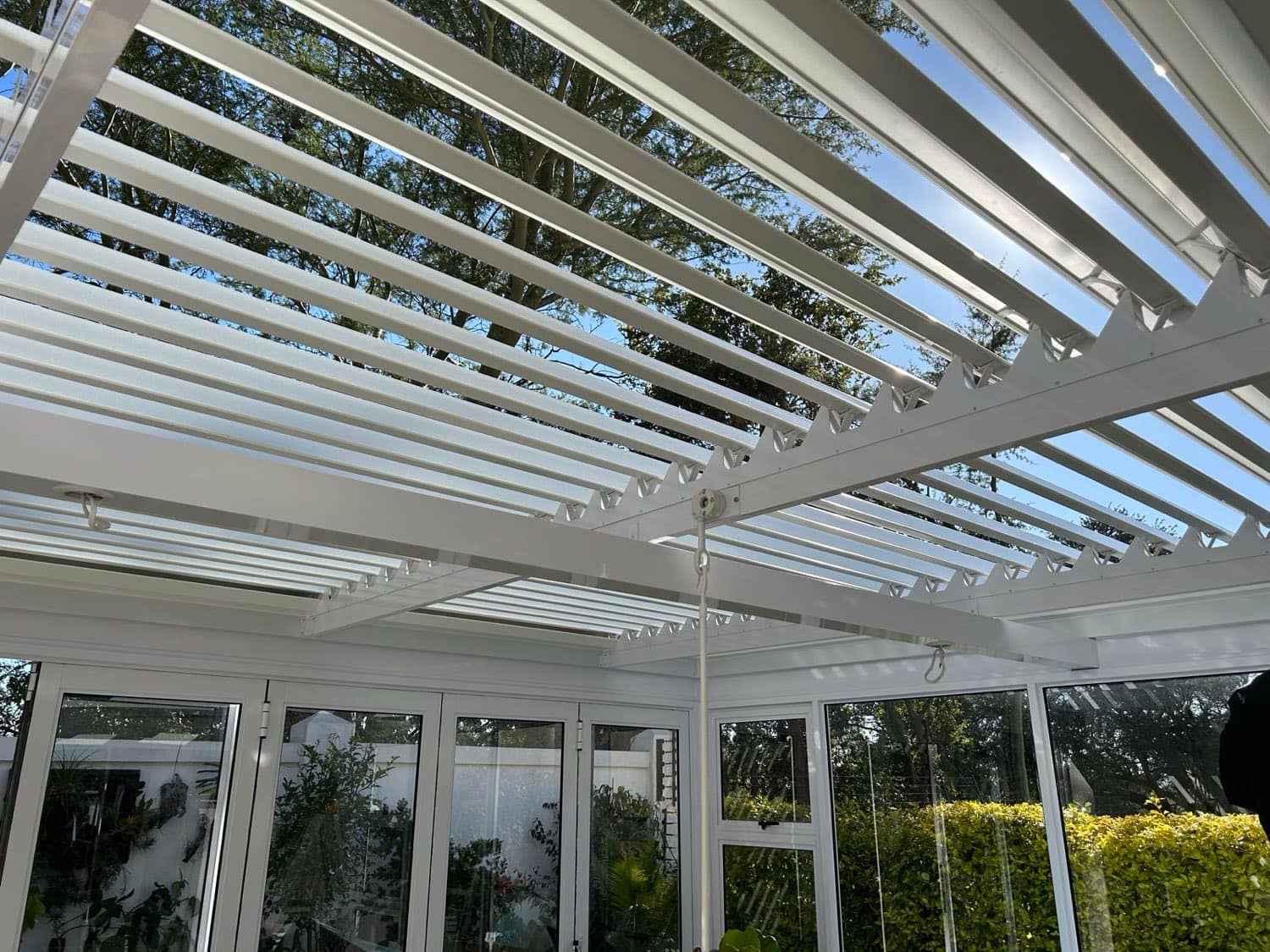
Blades open over the patio
Seen from under the roof: white blades standing open for light and air. The same blades seal into a solid surface minutes before a storm front lands.
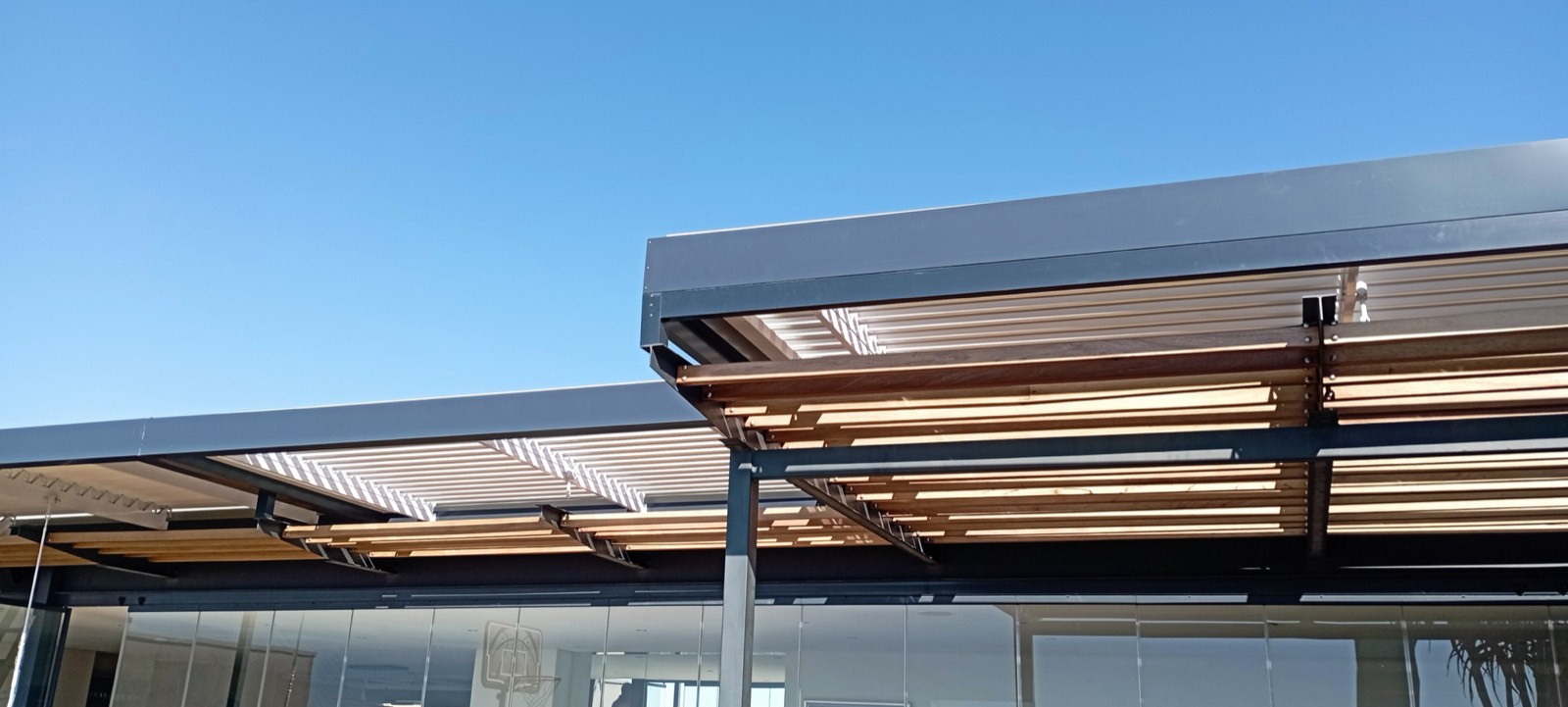
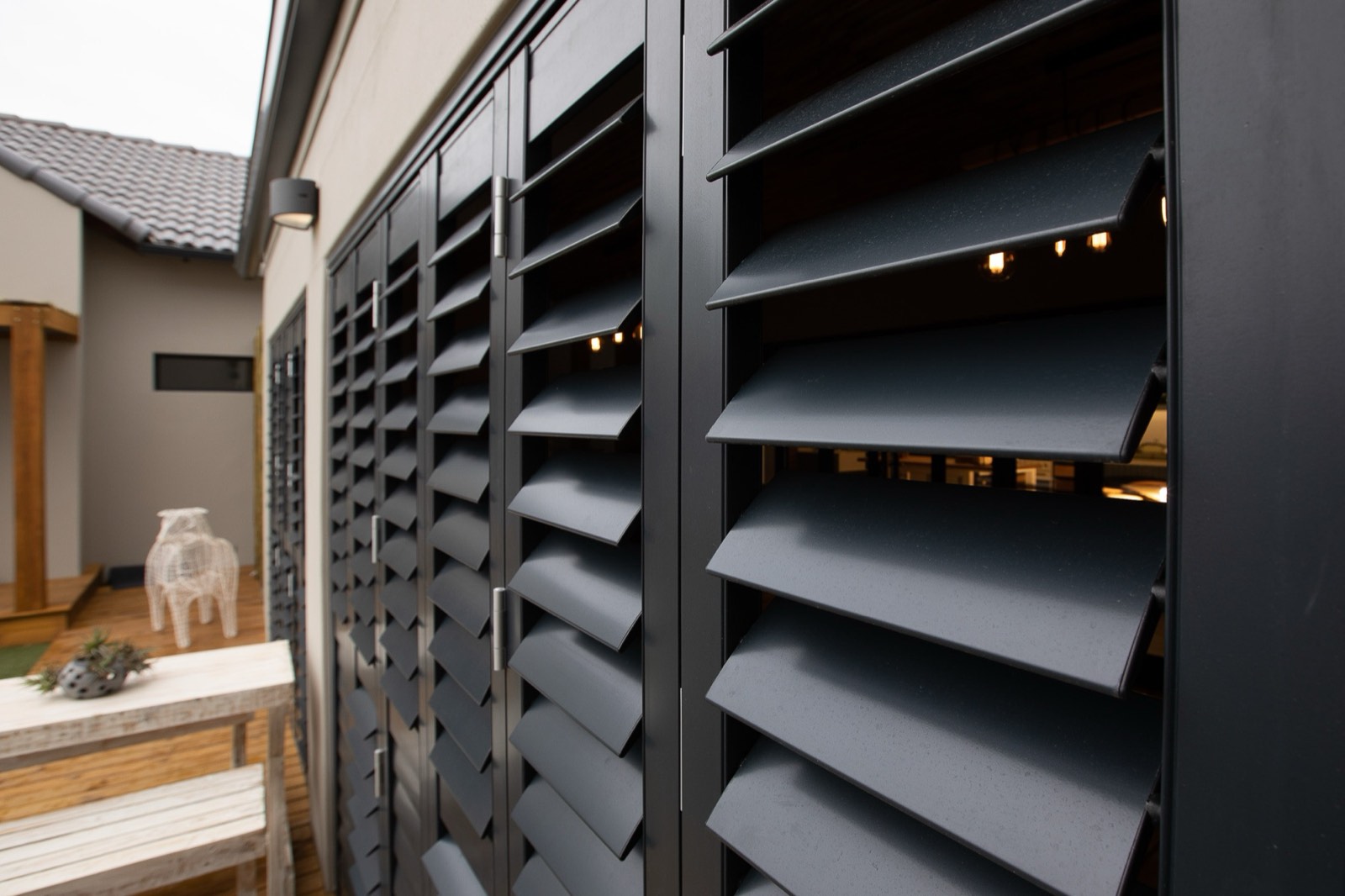
Charcoal against glass and timber
On this contemporary build the louvre roof works alongside timber slat pergolas, with the charcoal frame matching the fascia line of the house.
What goes into the roof
The spec every Gauteng louvre awning is built and installed to.
- Structure
- Marine-grade aluminium extrusions joined with stainless steel fasteners. Nothing ferrous goes into the frame, so nothing in it can rust.
- Blades
- Interlocking aluminium louvres rotating through roughly 150 degrees, from fully open to a closed, overlapping surface that sheds rain.
- Water handling
- Rain off the closed blades runs to a gutter formed into the perimeter frame and drops away through downpipes hidden inside the posts, so a hard afternoon downpour drains without splash.
- Hail
- Powder-coated aluminium blades stand up to hail far better than fabric or polycarbonate covers. No surface is hail-proof in a severe storm, and we assess your exposure at the free site visit.
- Finish
- Architectural powder coat across the full RAL colour range. Charcoal and white lead the requests, and the coating shrugs off highveld UV and wipes clean of dust.
- Operation
- Manual crank, or 230V motorisation with remote control; rain and wind sensors and app control are options. Electrics live in IP65-rated housings.
- Guarantee
- Your louvre roof carries a written guarantee on materials and workmanship, registered to your address.
Louvre awning questions
What Johannesburg and Pretoria homeowners ask us before they order.
How does a louvre awning cope with highveld hail?
Better than most patio covers. Solid aluminium blades take hail far better than fabric or polycarbonate, and storm season is the reason many Gauteng owners choose them in the first place. We will not call any roof hail-proof, because a severe storm can mark any surface, so we look honestly at your site's exposure during the free site visit.
Can the roof close itself before an afternoon storm?
Yes, on motorised units with the rain sensor fitted. The sensor reacts to the first drops and drives the blades closed within seconds, so a storm that breaks at four while you are still at work does not soak the furniture. A wind sensor can be added for the gust fronts that run ahead of the rain.
Are the closed blades waterproof in a thunderstorm?
Closed blades overlap and drain into the gutter around the frame, and that handles the short, heavy bursts a highveld storm delivers. At the height of a squall some wind-driven rain can still push spray past the open sides, which is where tracked outdoor blinds earn their place on exposed patios.
Does a louvre roof help with the summer heat and UV?
It does. The UV load at Gauteng's altitude is severe, and tilted blades block the direct sun while air keeps moving underneath, so the patio stays usable through a January afternoon. Come winter, you open the blades fully on those cold, clear mornings and let the low sun warm the space instead.
Should I pick manual or motorised?
Manual costs less, needs no wiring and suits a smaller patio you adjust now and then. Motorised comes into its own on larger roofs and anywhere you want the rain sensor standing guard through storm season; for most multi-bay installations in Johannesburg and Pretoria it is the option we recommend.
What do louvre awnings cost in Gauteng?
The main drivers are the span, the number of bays, manual versus motorised operation and how the frame fixes to your building, so two patios of the same size can quote quite differently. We measure at a free site visit anywhere in Johannesburg or Pretoria and send a fixed written quote within 48 hours.
What maintenance does it need on the highveld?
Little beyond an occasional wash. Highveld dust settles on every horizontal surface, so hose down the blades and rinse the gutter a few times a year, and clear leaves before storm season so the downpipes run free. The powder-coated finish never needs repainting.